THE PLACE
The people behind the salt.
Kłodawa combines an operating Polish rock-salt mine with an underground visitor route. The operator describes a salt-diapir deposit and supplies white and pink culinary salts alongside products for other uses. [1]
A mine with more than one market
The operator’s range spans culinary, industrial and agricultural uses. This directory’s food-salt listing refers to the culinary grades; products intended for roads, livestock or industrial processes are separate applications.
Descending to the visitor level
The advertised route begins with a cage descent in a mine shaft. Underground corridors lead to St Kinga’s chapel, with guides introducing the workings and their history. Visitor access follows the designated route within an active mine.
THE METHOD
How the salt is made.
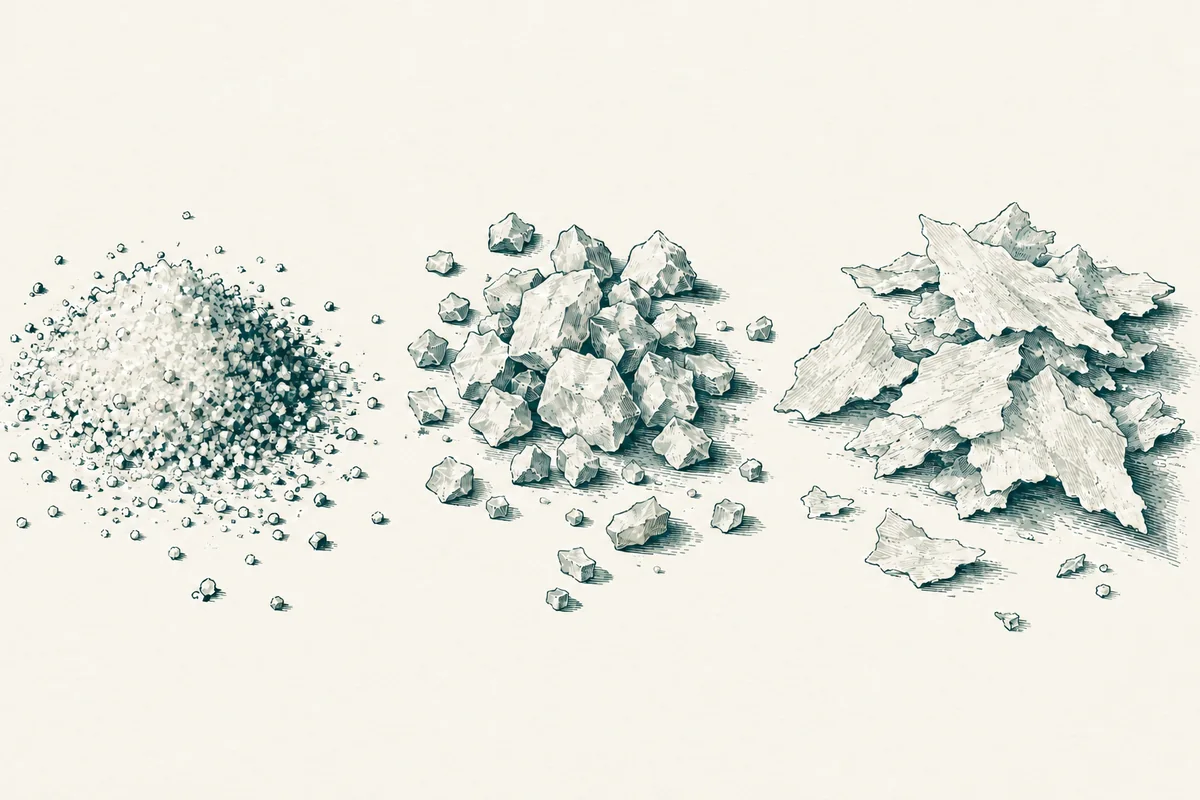
The mine describes conventional underground extraction followed by crushing, grinding and sorting. Its published account says these mechanical steps produce the finished salt, without chemical treatment. This is extraction of solid salt rather than evaporation of fresh seawater. [1]
Process described by the cited sources; method categories are editorial groupings. Not independently inspected.
THE HARVEST
What is made here.
PLAN A VISIT
Tours advertised
The operator advertises guided visits to the 600-metre level, including a shaft descent and St Kinga’s chapel. Consult its booking page and visitor rules before travelling. [2]
Reviewed 2026-11-14. Confirm current access directly before travelling.
What still needs checking
- Process and product descriptions are operator-reported; no independent inspection or complete product audit.
- Current tour availability and participation requirements remain with the operator.